Big show, bigger rethink
Wilkinson’s NIRVA run at Alexandra Palace was a milestone: “Headlining Alexandra Palace has been my dream since day one,” he posted on Instagram after the 10,000-strong show. The performance marked the largest headline live show of his 16-year career and arrived alongside INFINITY, his fifth album released in March 2026.
The record was made amid upheaval — moving house, rebuilding a studio and designing a new live show — and Wilkinson says that period of chaos directly influenced the music. He explains that those life events led him to consider “tension and how songs connect together,” and that as his DJ sets evolved, so too did the album’s styles of drum & bass.
INFINITY features collaborations with Kaskade and Camo & Crooked and pairs rolling synth bass and anthem-ready stabs with more reflective moments. Vocal contributions from Julia Church, Ilira, iiola and Emily Makis help give the album its quieter, soaring sections that balance the record’s grit and impact.
Designing NIRVA: lights, space and live dynamics
Putting NIRVA together forced Wilkinson to reassess his catalogue. Building a live show — rather than simply DJing — highlighted the importance of dynamics, space and emotion. He says quieter moments on stage became crucial because they make the bigger moments feel larger.
Visually, Wilkinson deliberately stepped away from the ubiquitous LED video wall. Rather than telling an audience exactly what to think with cinematic visuals, he positioned LED screens off to the sides and leaned into lighting that could “create atmosphere without telling the audience exactly what to think.” He wanted people to focus on the performance itself and to feel immersed, allowing the lighting to function almost like another instrument.
Hands-on performance: Ableton, Novation and muscle memory
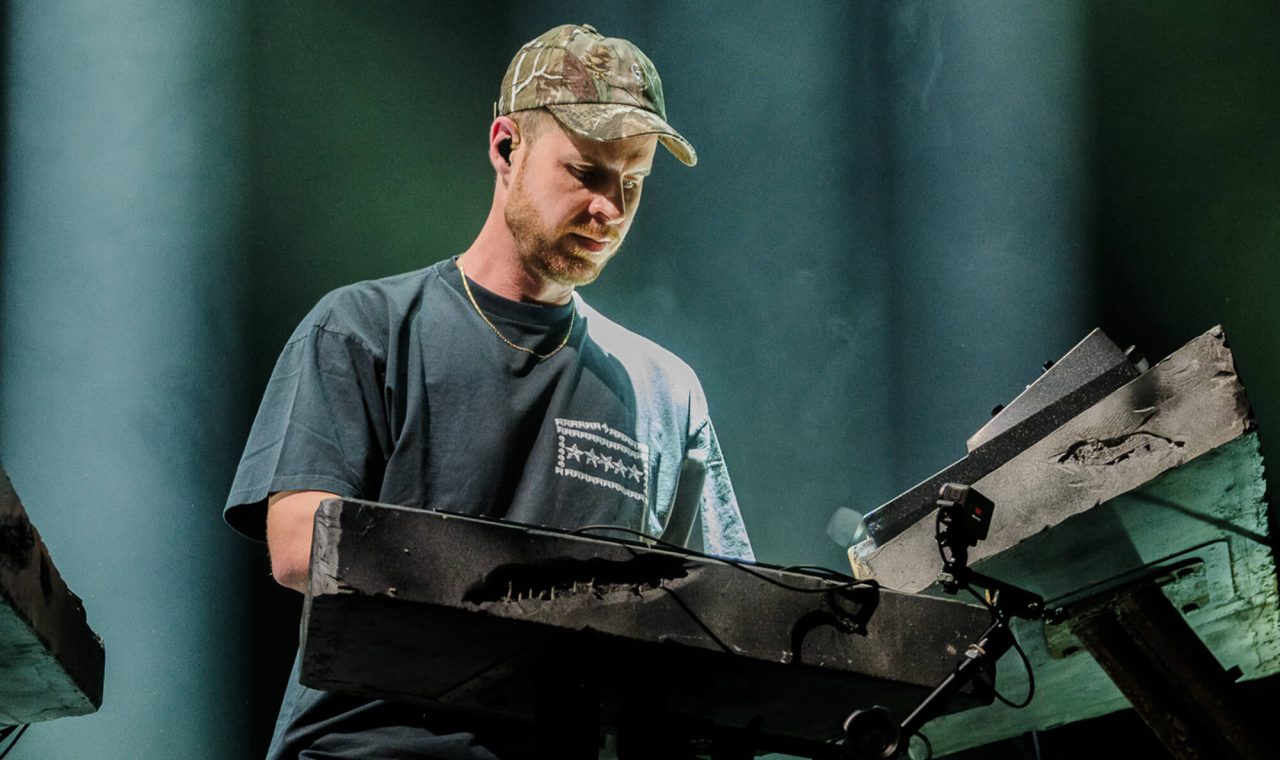
Ableton Live sits at the heart of the NIRVA setup, but the show is far from a simple play-and-press routine. Wilkinson triggers sections, stems and transitions live, manipulates effects in real time and stretches moments to match the room’s energy. The goal is to make the performance feel live rather than rely on pre-recorded playback.
Key to that approach are Wilkinson’s Novation controllers. He credits them with allowing him to play in the moment without overthinking the technology: they enable launching clips, triggering moments and controlling effects so everything becomes second nature. “Whether it’s launching clips, triggering moments or controlling effects, everything becomes muscle memory, which means I can stay focused on the performance instead of staring at a laptop,” he says.
And then there’s the Novation Bass Station — a long-running fixture in his chain. Wilkinson says the synth’s immediate character and the tactile response of reaching for a filter spark ideas in ways software often can’t. He’s owned lots of gear, but the Bass Station consistently reappears in sessions because it’s immediate and helps him spend “less time programming and more time making music.”
From idea to finished track: imperfections, space and workflow
Wilkinson describes each track’s origin as different: sometimes a vocal, sometimes a chord progression, sometimes simply a sound that stops him in his tracks. He aims to capture ideas quickly before over‑analysing them, using Ableton Live as the immediate hub and bringing in hardware when a part needs extra personality.
He also rejects the idea that technical perfection is the ultimate goal. A common myth he wants to debunk is that finishing a track means it’s perfect. Wilkinson argues that the imperfections listeners connect with often give records their character, and that emotion should trump flawless polish.
Working at places like Real World Studios taught him that great studios are about creating the right environment for focus, not merely expensive equipment. Back home, the priority remains a setup that lets him work fast; he warns ideas vanish when workflow gets in the way.
Advice for producers and what’s next
For producers chasing Wilkinson’s sound on a budget, his advice is concise: “Buy one decent controller, synth and learn them inside out.” He cautions that constantly buying plugins or new hardware rarely unlocks creativity; the standout producers he admires know their tools deeply.
Looking forward, Wilkinson says the next step is carving out time to experiment again after a period focused on finishing an album and delivering a major show. He’s interested in changing processes more than accumulating new equipment, believing that fresh workflows often spark the most exciting ideas. While he doesn’t see himself leaving drum & bass, he’s open to exploring other genres with similar energy and folding those influences into future projects.
ElectroLouis independently rewrote this report from the cited source material.