On October 31, 2026, Juan Atkins was found unresponsive in a hotel room in Mexico City, hours before he was due to play a set at a venue called YuYu Cine Club. He was taken to a hospital and pronounced dead at 64. Friends told the Detroit Free Press he died in his sleep. No official cause has been announced.
The tributes that followed kept returning to one word. Atkins did not just make techno, his peers said. He named it, and he did it with two school friends from a small town about 30 miles outside Detroit.
Three kids in Belleville
Belleville, Michigan, sits in a rural stretch near Detroit’s outer suburbs. Kevin Saunderson was born in Brooklyn and moved there at around nine or ten. Juan Atkins and Derrick May were both born in Detroit and later moved to Belleville; Atkins was raised there largely by his grandmother after his father was jailed. At Belleville High School the three were among the few Black students. “We three kind of gelled right away,” Saunderson later said.
Not entirely right away. Saunderson and May first met at 14, when May refused to pay up on a lost bet. Saunderson punched him at school, knocked him out cold and gave him a concussion. After that, by Saunderson’s account, they became best friends.
The town shaped how they heard music. May said they took it in differently than kids who first met it in dance clubs. “We’d sit back with the lights off and listen to records by Bootsy and Yellow Magic Orchestra,” May recalled. “We never took it as just entertainment, we took it as a serious philosophy.” Atkins described a community built around the auto plants, where Ford, GM and Chrysler wages had lifted families into foreman and even white collar jobs. “Everybody was equal,” he said.
The radio show
Their musical education came largely from one man. Charles Johnson, known on air as The Electrifying Mojo, hosted a five hour late night show on Detroit’s WGPR called The Midnight Funk Association. He played Kraftwerk next to Parliament, Prince next to the B-52s, and the three friends absorbed all of it.
Atkins was the first to move from listening to making. Hearing Parliament made him want a synthesizer, and his grandmother bought him one. He was also the first of the three to take up turntables, and he taught May and Saunderson how to DJ. Atkins and May began playing Detroit’s party circuit under the name Deep Space Soundworks, and by 1981 Mojo was playing mixes the friends had recorded.
Cybotron and the first wave
At Washtenaw Community College, Atkins met Rick Davis, and the two formed Cybotron. Their first single, “Alleys of Your Mind,” came out on their own Deep Space label in 1981 and sold 15,000 copies. “Cosmic Cars” and “Clear” followed. AllMusic’s John Bush has written that if you had to pick a single starting point for techno, “the easiest choice for techno is an Atkins release, the 1983 electro track ‘Clear.’”
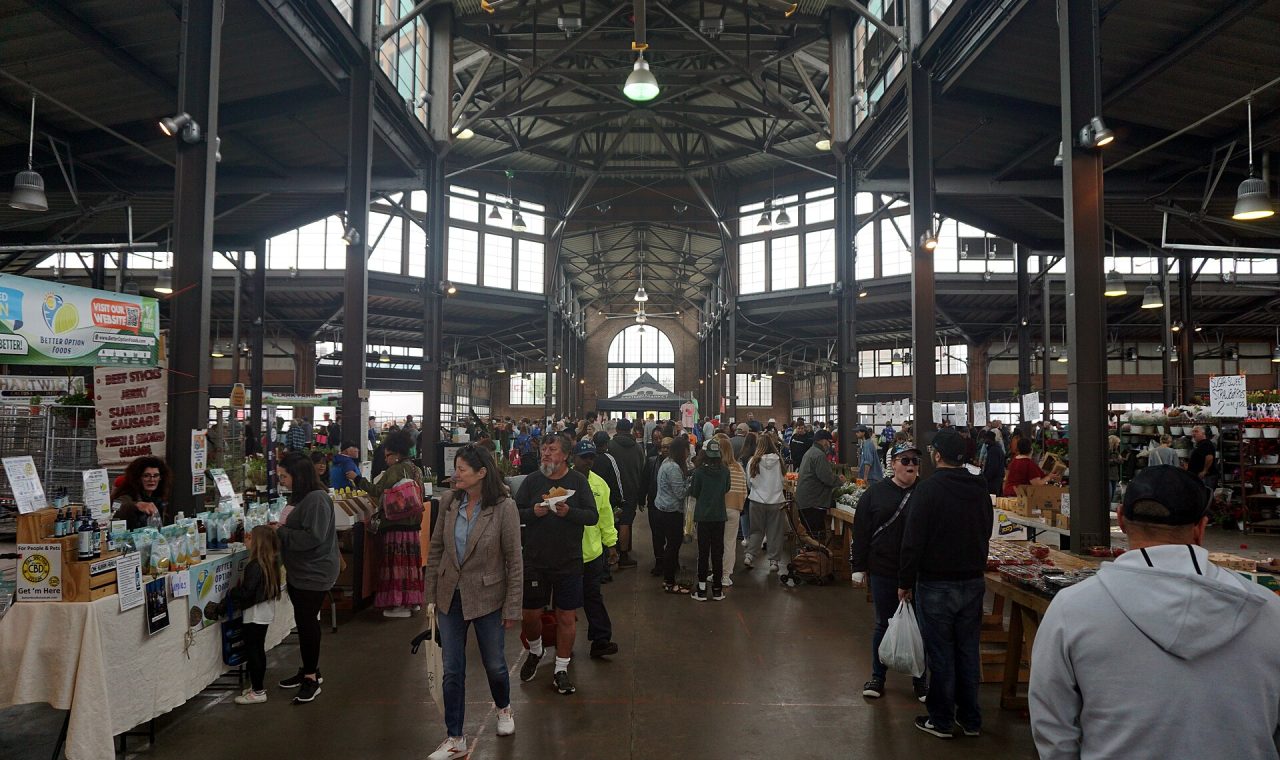
Cybotron split over creative differences. In 1985 Atkins started recording as Model 500 on his own label, Metroplex, and released “No UFOs.” May’s label Transmat began as an offshoot of Metroplex. Saunderson founded KMS, named for his initials. They set up shop close to one another in Detroit’s Eastern Market district, shared equipment and studio space, and worked on each other’s records, though friction grew between them over time.
Each went on to define a different side of the sound. May, recording as Rhythim Is Rhythim, released “Nude Photo” and then “Strings of Life” in 1987. That track was built from a piano piece by his friend Michael James, originally at 80 BPM, which May sped up, chopped into loops and layered with percussion and strings. Frankie Knuckles gave it its name after May handed him a demo tape. Saunderson found his biggest commercial success with Inner City and vocalist Paris Grey. He had made his first record, “Triangle of Love,” with Atkins’s technical help, released under the name Kreem on Metroplex.
The scene settled on nicknames for the three: Atkins the Godfather of Techno, May the Innovator, Saunderson the Elevator.
Choosing a word
The three made regular trips to Chicago to hear Ron Hardy and Knuckles, and their early records sat close to Chicago house. What made Detroit different was the machine aesthetic. They blended dance music with the mechanical sound of groups like Kraftwerk, in a way that reflected a city moving past its industrial peak. Atkins argued that Detroit was further along that transition than anywhere else, and that the obsession with machines and the future in their music came from there.
In 1988 the British dance entrepreneur Neil Rushton approached them about licensing their records for release in the UK. To make clear that this was not just more Chicago house, Rushton and the three settled on a label for the sound: techno. Atkins had been using the word since Cybotron, whose early singles included “Techno City.”
The music took off in Britain, though the three had mixed feelings about the drug culture that came with it overseas. May in particular has long argued that drugs are not necessary to enjoy good music.
Back home
Inspired by Chicago’s clubs, the three opened their own, the Music Institute, in downtown Detroit. It pulled a scattered scene into something like a family and helped seed a second wave of Detroit producers, many of whom the Belleville Three mentored.
In 2000 the first Detroit Electronic Music Festival was held. May took control in 2004 and renamed it Movement, putting in his own money; he later said he “got severely wounded financially.” Saunderson ran it the next year under the name Fuse In. By 2006 it was called Movement again, and the name stuck.
In 2003 the Detroit Historical Museum opened an exhibition called Techno: Detroit’s Gift to the World, telling the story of how Atkins, Eddie Fowlkes, May and Saunderson created the genre.
What his peers said
After Atkins’s death, the people who knew the story best said it plainly. Saunderson called him “the originator of Techno, a true visionary.” Carl Craig called him “the guy who made techno when nobody was calling it techno.” Jeff Mills said Atkins was “not merely one participant among many” but foundational to the genre.
It is a strange arc for a genre now heard in warehouses and festival fields worldwide. It started with three teenagers in a small Michigan town, a late night radio host, and a habit of listening to records in the dark like they meant something.
Photo: Michael Barera via Wikimedia Commons, CC BY-SA 4.0