You walk out of a club at 3 a.m. and the street sounds strange. Car doors are muffled. Your friend’s voice seems far away. There is a high whine in your ears that is still there when you lie down. By the next afternoon it has mostly faded, so you forget about it until the next weekend.
That ringing has a cause, and the numbers behind it are less forgiving than most people who go out every weekend assume.
How loud a dance floor really is
The U.S. National Institute for Occupational Safety and Health, part of the CDC, lists bars and nightclubs among the places where noise exposure averages 95 decibels or higher. At that level, NIOSH says, you will likely have to shout to be heard by someone three feet away. Anyone who has tried to order a drink near the booth knows the feeling.
Decibels do not work like ordinary numbers. The scale is logarithmic, which means every increase of 3 decibels is a doubling of sound energy. A floor at 100 decibels is not a little louder than one at 94. It is carrying four times the sound energy.
The budget your ears are working with
NIOSH set a recommended exposure limit for workers of 85 A-weighted decibels averaged over an eight hour day. For every 3 decibels above that, the safe time is cut in half. The agency’s own table looks like this:
- 85 dBA: 8 hours
- 88 dBA: 4 hours
- 91 dBA: 2 hours
- 94 dBA: 60 minutes
- 97 dBA: 30 minutes
- 100 dBA: 15 minutes
Two caveats matter. First, NIOSH designed this limit for people at work, and it assumes the rest of the day is quiet. It is not a rule for nightlife, and NIOSH says so. Second, everyone’s ears differ, and some people are damaged at lower doses. Even with those caveats, the table is the best public yardstick we have, and the math is sobering. If the floor averages 100 decibels, you hit a full day’s recommended dose in about the time it takes to get through the opener’s first few tracks. A six hour night at that level is many times over.
What the ringing means
The World Health Organization’s guidance is blunt: exposure to loud sounds causes temporary hearing loss or tinnitus, and prolonged or repeated exposure can lead to permanent damage. That is the muffled, ringing feeling on the way home. It usually fades, which is why it is easy to ignore. The concern is what happens when it is repeated week after week for years.
Hearing loss from noise is permanent, and it is also preventable. In 2022 the WHO estimated that more than 1 billion people aged 12 to 35 are at risk of losing hearing because of prolonged and excessive exposure to loud music and other recreational sound.
What venues are being asked to do
The same year the WHO published a Global Standard for Safe Listening Venues and Events. It sets out six recommendations for clubs, concerts and festivals:
- A maximum average sound level of 100 decibels
- Live monitoring and recording of sound levels with calibrated equipment, by staff assigned to the job
- Venue acoustics and sound systems set up so music sounds good at safe levels
- Hearing protection available to the audience, with instructions on how to use it
- Quiet zones where people can rest their ears
- Training and information for staff
Notice what the first point says. Even the WHO’s ceiling for a safe venue is 100 decibels average, the level at which the NIOSH table runs out in 15 minutes. The standard assumes people will also use protection, take breaks and move around. It does not assume that 100 decibels is harmless for a whole night.
What actually helps on a night out
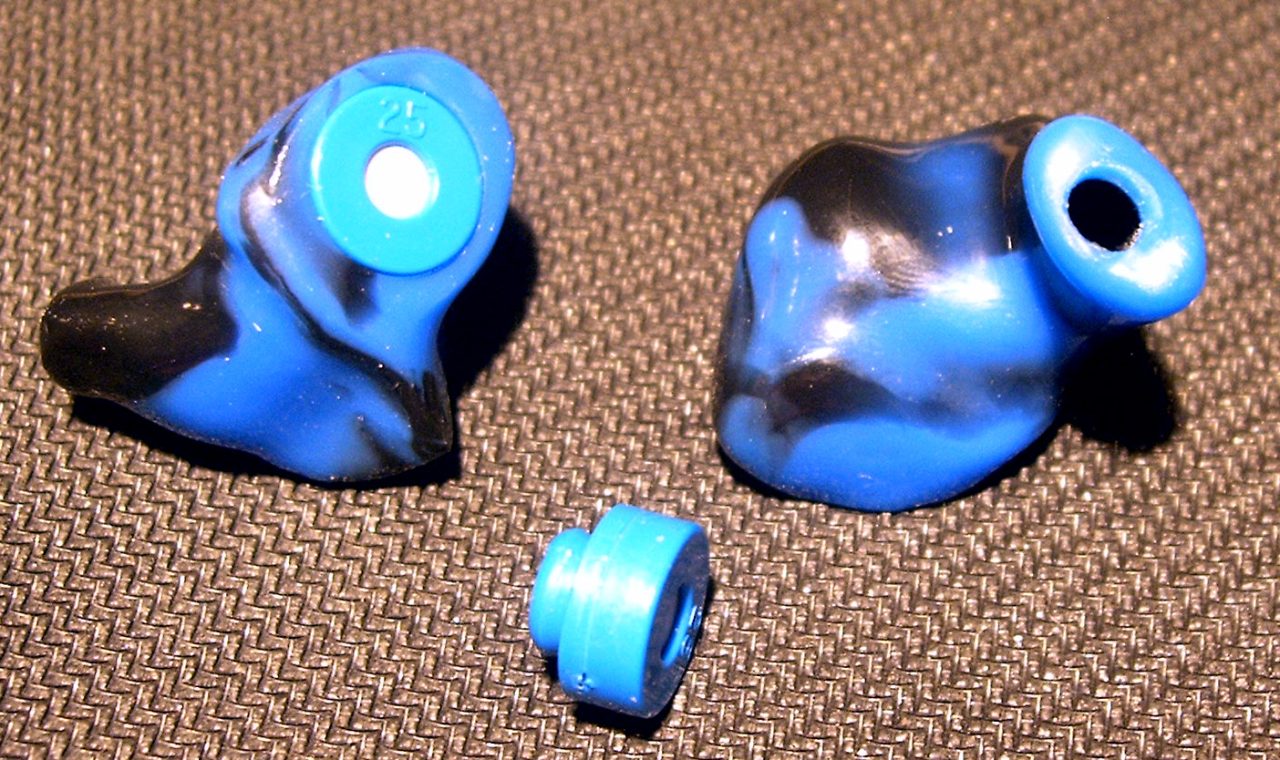
Wear earplugs, and pick the right kind. Cheap foam plugs work well when they are rolled thin and inserted deep enough to expand in the ear canal, but they cut high frequencies more than lows, so music sounds dull. Musician style earplugs use a filter designed to lower volume more evenly across frequencies, so the mix still sounds like the mix, only quieter. Many regulars say that once they get used to them, they enjoy the music more because the top end stops being painful.
Mind where you stand. Sound level falls with distance. The front rail and the spot right next to a stack are the loudest places in the room. Moving back even a few meters helps, and the mix is often better there anyway.
Take real breaks. Your exposure is an average over time. Twenty minutes in a smoking area, a chill room or outside lowers your total dose. This is the logic behind the WHO’s call for quiet zones.
Measure it. NIOSH makes a sound level meter app for iPhone, and there are similar apps for Android. A phone is not a lab instrument, but it will tell you whether the floor is closer to 90 or 105.
Treat ringing as a warning, not a souvenir. If your ears ring after a night out, give them quiet time to recover before the next loud event. If ringing or muffled hearing lasts more than a day or two, or keeps coming back, see a doctor or audiologist and get a hearing test.
For DJs and producers
The people behind the decks get the highest dose of all, night after night. NIOSH has published guidance specifically on reducing hearing risk among musicians, noting that their exposures are irregular and can be very high. In-ear monitors set at sensible levels, custom molded earplugs and a booth monitor that is not cranked to compete with the main system all help. Your ears are the main tool of the job. There is no replacement set.
None of this means you have to stay home. It means bringing something that weighs less than a door key and makes it far more likely you will still be hearing the hi hats clearly in twenty years.
Photo: Kick the beat via Wikimedia Commons, public domain